
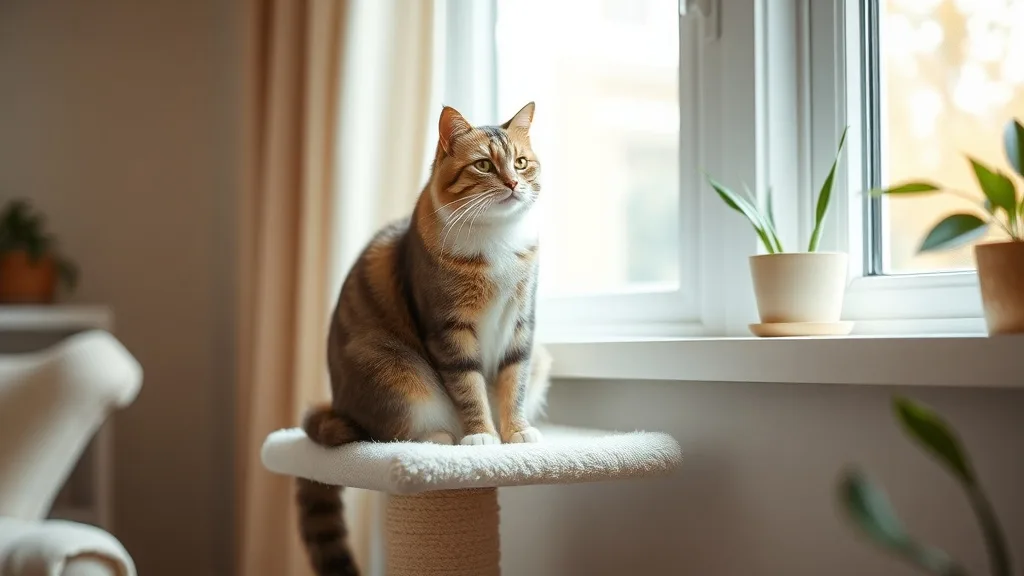
If your senior cat still loves to climb but struggles with jumping into the tall, multi-level cat trees common for younger felines, you’re facing a common challenge. Cats over 10 years often experience reduced mobility and joint stiffness, making high jumps difficult or painful, yet their instinct to perch up high remains strong. Low entry cat trees provide a perfect solution, offering your senior cat vertical space without demanding strenuous leaps.
What Are Low Entry Cat Trees?
Low entry cat trees are designed with accessibility and comfort in mind, featuring lower platforms, gentle inclines, or ramp-like structures instead of steep jumps. These cat trees gently accommodate aging joints while still satisfying cats’ natural desire to observe their environment from an elevated position. Unlike traditional models that start several feet off the ground, low entry trees typically have base platforms just a few inches high and build slowly upwards to moderate heights.
Such trees often include wider platforms, ramps, and softer materials to reduce impact on joints, making transitions from floor to perch smoother and less intimidating. They offer vertical enrichment without compromising mobility or causing undue stress.
See also: Creating Comfortable Living Spaces for Elderly Cats at Home
How Do Low Entry Cat Trees Support Senior Cats?
The importance of vertical territory for cats cannot be overstated—they like to watch their domain from a height, which helps with confidence and mental stimulation. However, as cats age (10+ years), issues like arthritis, muscle loss, weight gain, or kidney issues can reduce their leap ability. A low entry cat tree:
- Minimizes strain by eliminating tall jumps
- Offers gradual elevation steps or ramps to ascend
- Uses soft, stable materials to prevent slips and aches
- Incorporates cushioned resting spots for comfort and easy recovery
- Provides accessible scratching surfaces to maintain claw health and activity levels
This design respects a senior cat’s physical limits while still promoting daily exercise, sensory enrichment, and a sense of security.
When to Choose a Low Entry Cat Tree
Consider a low entry cat tree if your senior cat:
- Struggles or refuses to jump onto traditional cat furniture
- Shows signs of joint pain, stiffness, or slower movement
- Is overweight or recovering from surgery or illness
- Needs environmental enrichment but on a gentler scale
Even if your cat isn’t battling arthritis, a lower, easier climb reduces fall risk and keeps their environment stimulating without forcing risky physical feats.
How to Select the Best Low Entry Cat Tree: Comparison
There are many designs, so consider what features best meet your cat’s needs. Below is a guide to help choose features based on different mobility and comfort priorities.
| Feature | Gentle Incline Trees | Multi-Platform Low Trees | Ramp-Integrated Trees | Floor-Level Loungers with Perch |
|---|---|---|---|---|
| Entry Height | 3-5 inches | 4-6 inches | 2-4 inches | Floor level |
| Mobility Aid | Inclined carpeted slope aiding climb | Wide, sturdy steps with platforms | Separate ramp providing gentle ascent | No climbing, reachable perch |
| Ideal for | Cats with mild to moderate mobility issues | Cats that like to hop short distances | Cats with more pronounced joint problems | Cats avoiding jumping entirely |
| Size Footprint | Moderate | Larger, space-intensive | Moderate | Compact |
| Stability | High (low center of gravity) | Very high | High | Very high |
| Platform Softness | Medium padding | Firm platforms, some padding | Medium padding | Max padding and coziness |
| Scratching Elements | Vertical posts, ramp scratching | Multiple posts and wide surfaces | Scratch ramp | Minimal scratching |
| Cost Range | $$ | $$$ | $$-$$$ | $-$$ |
Explanation of Features:
- Gentle Incline Trees: They use a carpeted slope allowing older cats to walk or climb gently upward without a jump. Ideal if your cat can still walk but avoids jumps.
- Multi-Platform Low Trees: Featuring several low-height platforms to climb short distances, suitable if your cat enjoys hopping but struggles with height.
- Ramp-Integrated Trees: Include a dedicated removable or fixed ramp leading to a perch. Benefit cats with pronounced joint stiffness who can’t jump at all but can walk steadily.
- Floor-Level Loungers with Perch: Minimal climbing, often just a cozy floor nook with a low perch for that high vantage point with zero jumping.
Common Pitfalls to Avoid When Choosing or Using Low Entry Cat Trees
- Ignoring Size and Stability: Some low trees are narrow or wobbly, putting seniors at risk of falls or causing anxiety. Ensure the tree is on a stable base and suitable for your cat’s weight.
- Skipping Scratching Elements: Scratching maintains joint function and reduces stress. A low entry tree should still offer scratching posts or surfaces.
- Overlooking Material Comfort: Seniors benefit from plush or memory foam padding, especially if they have arthritis. Hard surfaces might deter use.
- Positioning in Hard-to-Access Areas: Even a low tree is useless if placed far from your cat’s usual resting or feeding spots. Accessibility is key.
- Neglecting Regular Cleaning: Older cats might be less tolerant of dirty or dusty trees, especially with kidney or respiratory issues. Clean surfaces regularly.
How to Encourage Your Senior Cat to Use a Low Entry Cat Tree
- Place Familiar Items: Add a favorite blanket or toy to each platform, especially initially.
- Use Treats and Praise: Reward small climbs or exploration steps to build positive association.
- Keep It Near Resting Areas: Position near their existing favorite napping or watching spots.
- Be Patient: Some seniors need several days or weeks to feel confident on new furniture.
- Observe and Adapt: If the cat shies away, try adding lower platforms, more padding, or even a ramp attachment.
Summary
Low entry cat trees provide the best of both worlds for senior cats who want height without the strain—making them an essential part of age-appropriate feline care. Prioritize stability, accessibility, soft platforms, and scratching elements to craft a safe cat haven that fosters activity, comfort, and mental stimulation.
Frequently Asked Questions
Q: How high should a low entry cat tree be for a senior cat?
A: Ideally, the first platform should be under 6 inches off the ground, with gradual increments not exceeding 8-12 inches to accommodate limited jumps.
Q: Can ramps or stairs really help older cats climb?
A: Yes, ramps or stairs provide gentle access to higher levels while reducing strain on joints and minimizing risk of injury.
Q: How do I know if my cat is too arthritic to use a cat tree?
A: Signs include reluctance to jump, slow movements, stiffness after rest, or vocalizing pain. Consult your vet if you’re unsure and consider the lowest possible entry with ramps or floor-level options.
Our picks worth a closer look
- 2-Pack Dog Ramp Stairs for Pets ups to 170lbs, Durable Anti-Slip Carpet Surface,Check on Amazon → — see current price and specs.
- Royal Canin Aging 12+ Dry Cat Food 7 lbCheck on Amazon → — see current price and specs.
- Feliway Classic Starter Kit Plug-In Diffuser and Refill 48mlCheck on Amazon → — see current price and specs.
- PetSafe Drinkwell Platinum Pet Water Fountain 168ozCheck on Amazon → — see current price and specs.
- K&H Pet Products Thermo-Kitty Heated Cat Bed Small MochaCheck on Amazon → — see current price and specs.